Cellar & value
Wine Value Estimator App: How to Use Price Ranges Wisely
A price range on your phone will not make you rich — but it can stop you from overpaying for a bottle that should cost half as much at a shop down the street.
Key takeaways
- Use value ranges to spot unfair markup, not to set auction reserves.
- Vintage, condition, and seller matter as much as the label name.
- Pair price context with tasting notes so value aligns with quality you want.
What it estimates
Market range, not certified appraisal
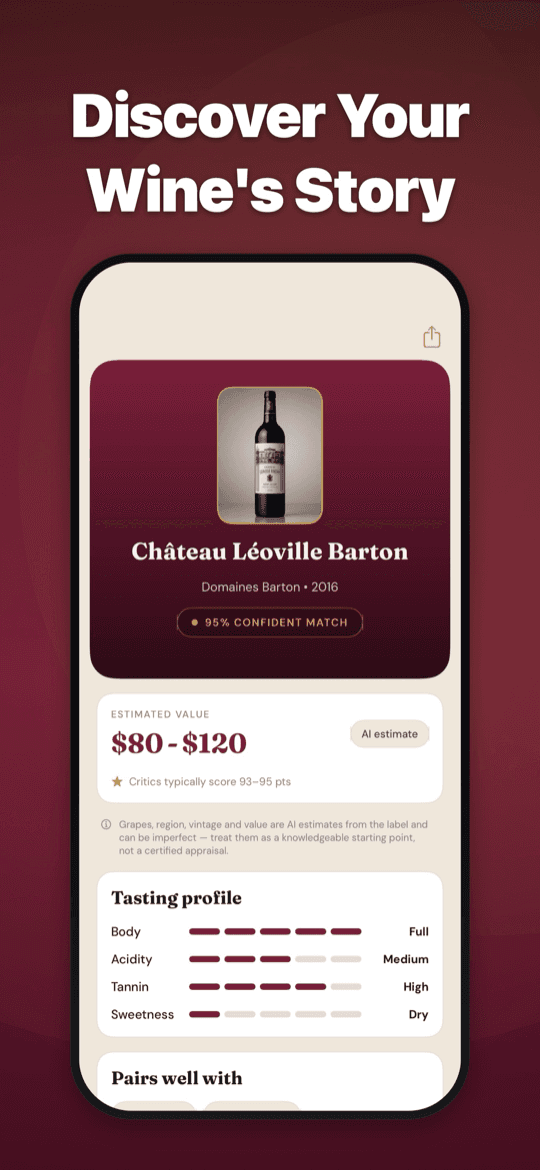
A wine value estimator synthesizes market signals — typical retail price, vintage reputation, regional demand — into a range. Wine Identifier shows this range with a confidence level so you know when the estimate is solid vs. speculative.
This is not a formal appraisal. Auction houses, insurance companies, and estate valuations require bottle inspection, provenance documentation, and storage verification. An app cannot provide any of that from a label photo.
The honest use case: orientation. Is this $45 restaurant bottle a $15 retail wine with a 3x markup? Is this $12 shop bottle unusually cheap for a well-regarded vintage? The range answers "ballpark" quickly.
Shopping use
Compare shelf price to estimated range
Scan the bottle. Read the range. Compare to the tag. A bottle priced 40% above the high end may still be worth it if the vintage is exceptional and shops near you cannot stock it. A bottle priced at the high end of a mediocre vintage is a pass.
Multi-bottle shopping sessions benefit from unlimited scans. Compare three Zinfandels not just by price tag but by value relative to estimated range and tasting profile.
Restaurant wine lists rarely show retail price. Scanning at the table (discreetly) reveals whether the list markup feels reasonable for the bottle category.
Cellar tracking
Value history for bottles you own
Scanning bottles in your collection creates a record of estimated value over time. Pro adds cellar value insights across your scanned bottles.
Track what you paid vs. estimated range at purchase. Over months, patterns emerge about which regions and producers deliver value in your market.
For insurance purposes, consult a professional appraiser. For personal reference and shopping decisions, app estimates are sufficient.
Try it yourself
Scan any label. Get the full dossier.
Wine Identifier is free to download with one complete scan per day. Pro unlocks unlimited scans, the full Wine Library, and cellar value insights — built for shops, restaurants, and home cellars.
FAQ
Common questions
Is Wine Identifier a certified appraisal tool?+
No. It provides AI-derived market estimates for personal orientation. Do not use app values for insurance, legal, or auction purposes.
Why do wine prices vary so much by store?+
Import costs, state taxes, distributor margins, and local competition all affect shelf price. The same bottle can differ by $5–15 between retailers in the same city.
Does vintage affect value estimates significantly?+
Yes. A great vintage of a well-known producer may cost 2–3x a weak vintage of the same wine. The app factors vintage reputation into its range.
Can I scan bottles to sell my collection?+
Scanning helps catalog and estimate, but selling fine wine requires verified provenance and condition. Use app data as a starting point for research, not a listing price.